NASA Partners with Katalyst: Private Spacecraft Link to Boost 22-Year-Old Swift Observatory
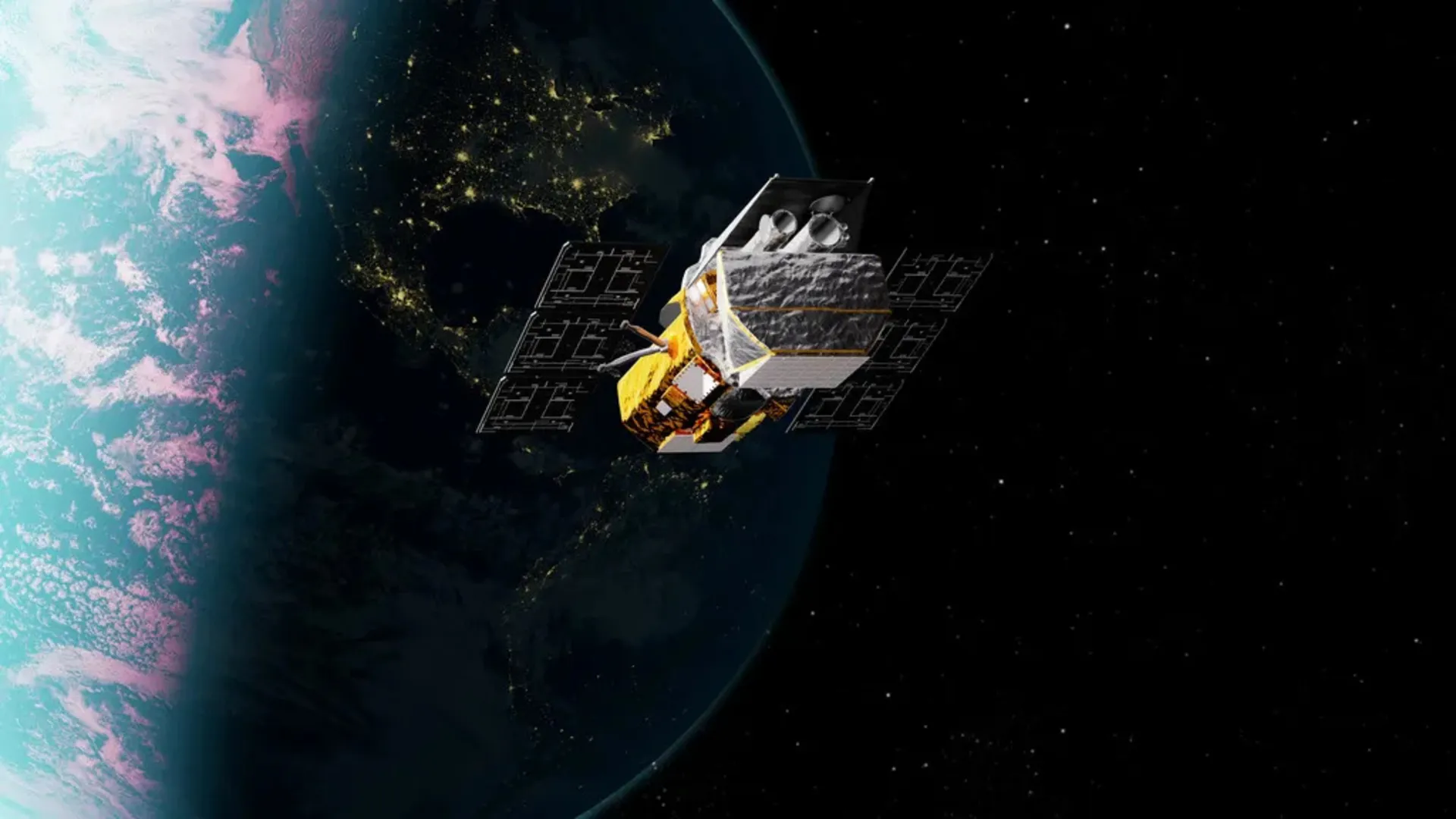
Summary: NASA has signed a $30 million contract with Katalyst Space Technologies of Arizona to launch a private spacecraft called "Link" in late June, tasked with rendezvousing with and boosting the Neil Gehrels Swift Observatory that has been operating in low Earth orbit since 2004. The mission comes as solar activity's 11-year peak in 2024 accelerated atmospheric drag on the aging telescope, which has no propulsion system of its own. Link will demonstrate the first-ever commercial capture of an operational U.S. government satellite.
A 21-Year-Old Telescope Facing Gravity's Pull
NASA's Neil Gehrels Swift Observatory launched in 2004 to hunt for gamma-ray bursts and other high-energy cosmic phenomena. While the spacecraft remains in good operational health, atmospheric drag is pulling it down at an ever-increasing rate — and Swift is powerless to resist, lacking any propulsion system.
The root cause is Solar Cycle 25, which peaked in 2024 with intense space weather that expanded Earth's upper atmosphere, increasing density at Swift's orbital altitude. Modeling work performed in early 2025 by NASA and Katalyst predicted the observatory's orbital decay trajectory, prompting the emergency response.
Link: An Unprecedented On-Orbit Capture
Built by Katalyst Space Technologies, Link will become the first private spacecraft ever to capture a robotic satellite operated by the U.S. government. The mission is extraordinarily challenging — the team cannot precisely predict where Swift will be in the coming months due to ongoing atmospheric variability.
Link is scheduled to launch in late June aboard a Northrop Grumman Pegasus rocket. The mission must reach Swift before the telescope drops below approximately 300 km altitude — the "critical altitude" that gives Link the best chance of a successful rendezvous.
Operational Challenges: Finding a Moving Target
"Weekly orbital predictions" are currently being generated for Swift, which the mission team uses "to make decisions about when to halt science observations and how to steer the spacecraft," said Russell Carpenter, deputy project manager at NASA's Space Surveillance Mission Office (SSMO). "The project to re-boost Swift has generated intense interest across the flight dynamics community."
Michael Shoemaker and colleagues at NASA Goddard incorporate data from space weather forecasts, Swift's current altitude, orientation, and other factors into evolving models. The team is also working on predictions for where Swift will be at the time of Link's launch.
Beyond Swift: Foundations for In-Orbit Servicing
The technical advances driven by the Link mission extend far beyond saving one telescope. Orbital prediction models developed for Swift are already being applied to a variety of satellites — active and defunct — to assess re-entry and collision risks. These capabilities will inform future in-orbit servicing, debris removal, and deep-space infrastructure.