
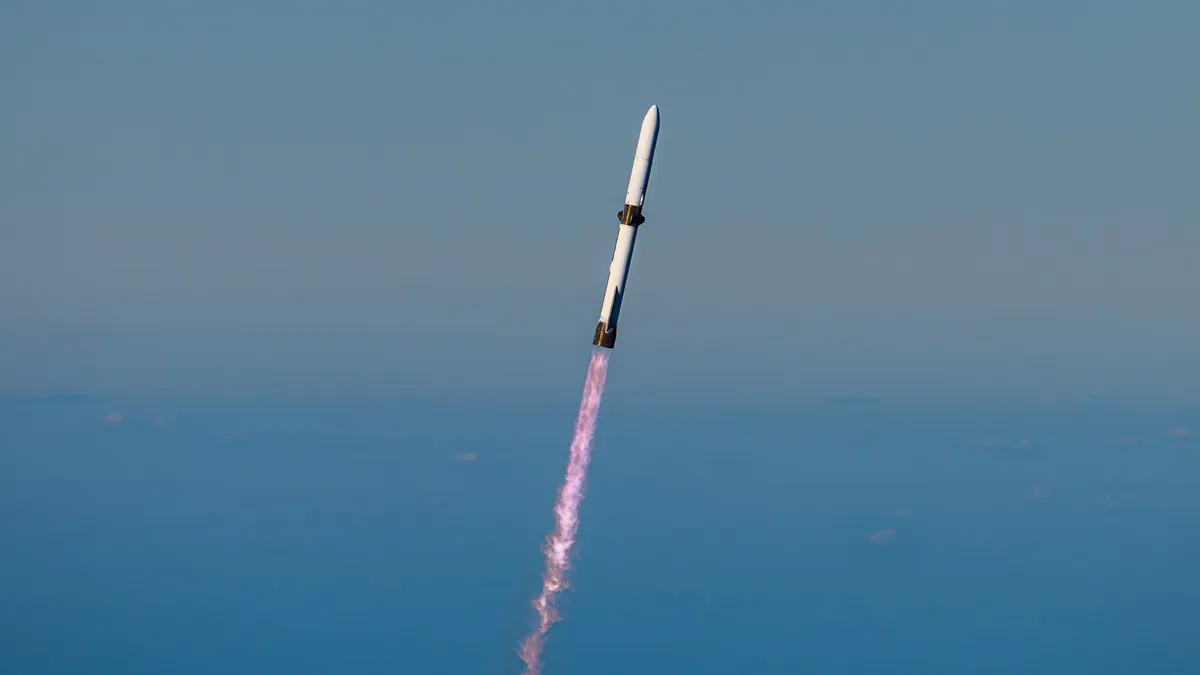
Blue Origin's New Glenn Rocket Explodes During Prelaunch Hotfire Test at LC-36, Fourth Flight Indefinitely Postponed
Summary: On May 28, 2026, Blue Origin's New Glenn rocket — powered by seven BE-4 liquid oxygen/methane engines — exploded during a hotfire test at Cape Canaveral's Launch Complex 36 (LC-36), tearing apart the 320-foot-tall (98 m) vehicle and critically damaging the pad's lightning tower and transporter erector. A cryogenic leak that froze a hydraulic line is suspected as the root cause. Blue Origin has stated that this incident is unrelated to the upper-stage malfunction that affected the NG-3 mission in April. No injuries were reported, but the explosion has indefinitely postponed New Glenn's fourth flight, which was to launch Amazon's first batch of Kuiper broadband satellites. The incident also threatens NASA's Artemis program, which depends on Blue Origin's Blue Moon Mark 2 lander and New Glenn as a shared launch vehicle with ULA's Vulcan rocket.
What Happened
Blue Origin confirmed the explosion in a post on social media platform X on Thursday evening, May 28 (01:00 UTC May 29): "No injuries. We are conducting a full assessment."
Founder Jeff Bezos posted separately: "All personnel are confirmed safe. It is too early to know root cause with certainty, but we have already begun a full investigation and will be rebuilding. A very difficult day. But we will be back."
The explosion occurred during a hotfire test — a standard prelaunch procedure in which the rocket's first-stage engines are briefly ignited while the vehicle remains on the launch pad. The seven BE-4 engines ignited normally before the vehicle catastrophically failed, producing a massive fireball that lit up the Space Coast and destroyed the pad's lightning tower on the right side, as well as the transporter erector structure.
According to the FAA, the static fire test was not within the scope of the FAA's licensed activities and therefore will not trigger a new investigation. The FAA had previously closed its investigation into the NG-3 upper-stage failure and cleared New Glenn to resume flights on May 22 — just six days before the explosion.
Suspected Root Cause: Cryogenic Leak
According to Spaceflight Now, the accident appears related to a propellant leak. After liquid oxygen and methane were loaded into the vehicle, a suspected cryogenic leak apparently froze a hydraulic line on the rocket's first stage, causing it to lose control during engine ignition. Blue Origin has stated that this incident is unrelated to the upper-stage malfunction that affected the NG-3 mission in April 2026. This issue may be connected to the main propulsion system of New Glenn's seven BE-4 engines, which are also used on United Launch Alliance's (ULA) Vulcan rocket.
Video and witness descriptions show the explosion propagating upward from the engine section, destroying the first-stage booster. The LC-36 pad's right-side lightning tower collapsed, and the umbilical tower and support structures sustained severe damage.
Amazon Kuiper Satellites Not Yet Integrated
Amazon's Kuiper broadband satellites were not yet integrated with the New Glenn rocket at the time of the explosion. According to Blue Origin, the satellites remain in the payload processing facility and had not yet been transported to the pad for mating with the vehicle. The NG-4 mission was planned as the first of 24 launches to deploy the full Kuiper constellation of 3,236 satellites.
NASA's Artemis Program at Risk
NASA Administrator Jared Isaacman addressed the explosion on X: "Spaceflight is unforgiving, and developing new heavy-lift launch capability is extraordinarily difficult. We will work with our partners to support a thorough investigation of this anomaly, assess near-term mission impacts, and get back to launching rockets."
Blue Origin's New Glenn rocket is central to NASA's Artemis human landing system architecture. The Blue Origin Blue Moon Mark 2 lunar lander — selected by NASA to ferry astronauts to the lunar surface alongside SpaceX's Starship — is planned to launch aboard New Glenn for an Artemis 3 low-Earth-orbit demonstration flight before the actual lunar descent. Blue Origin also holds a NASA contract to launch the Lunar Terrain Vehicle (LTV) using New Glenn. Damage to LC-36 will directly affect the Artemis program's cadence.
The supply chain risk is particularly acute: ULA's Vulcan rocket also uses the BE-4 engine, meaning any systemic BE-4 reliability issue would affect both New Glenn and Vulcan simultaneously.
New Glenn Flight History
New Glenn has flown only three times to date:
- NG-1 (January 2025): Maiden flight — success, Blue Ring platform delivered to orbit, booster successfully recovered.
- NG-2 (April 2025): Success, multiple satellites deployed, booster recovered.
- NG-3 (April 19, 2026): Second stage malfunction failed to deliver AST SpaceMobile's BlueBird 7 satellite to its intended orbit; satellite will reenter and burn up in Earth's atmosphere. The FAA briefly grounded the vehicle pending investigation, then cleared resumption on May 22.
The May 28 explosion marks New Glenn's second anomaly in just over a month.