
SpaceX Charts Starship V3 Roadmap After Historic Debut: Orbital Stays, Refueling Tests, 10,000 Flights Per Year
Summary: SpaceX's first Starship V3 (Version 3) vehicle successfully completed its maiden flight on May 22, 2026, achieving controlled splashdown of the Ship stage in the Indian Ocean while the Super Heavy booster suffered an off-target landing in the Gulf of Mexico. On May 28, SpaceX published its roadmap: once FAA clears the vehicle to fly again, Starship V3 will carry out extended low Earth orbit stays and orbital propellant transfer demonstrations, with the goal of launching NASA's Artemis 4 crewed lunar landing mission by late 2028. Longer term, SpaceX aims for more than 10,000 Starship launches per year, delivering over 200 tons of useful payload per flight.
Flight 12 Recap: Booster Landing Did Not Go as Planned
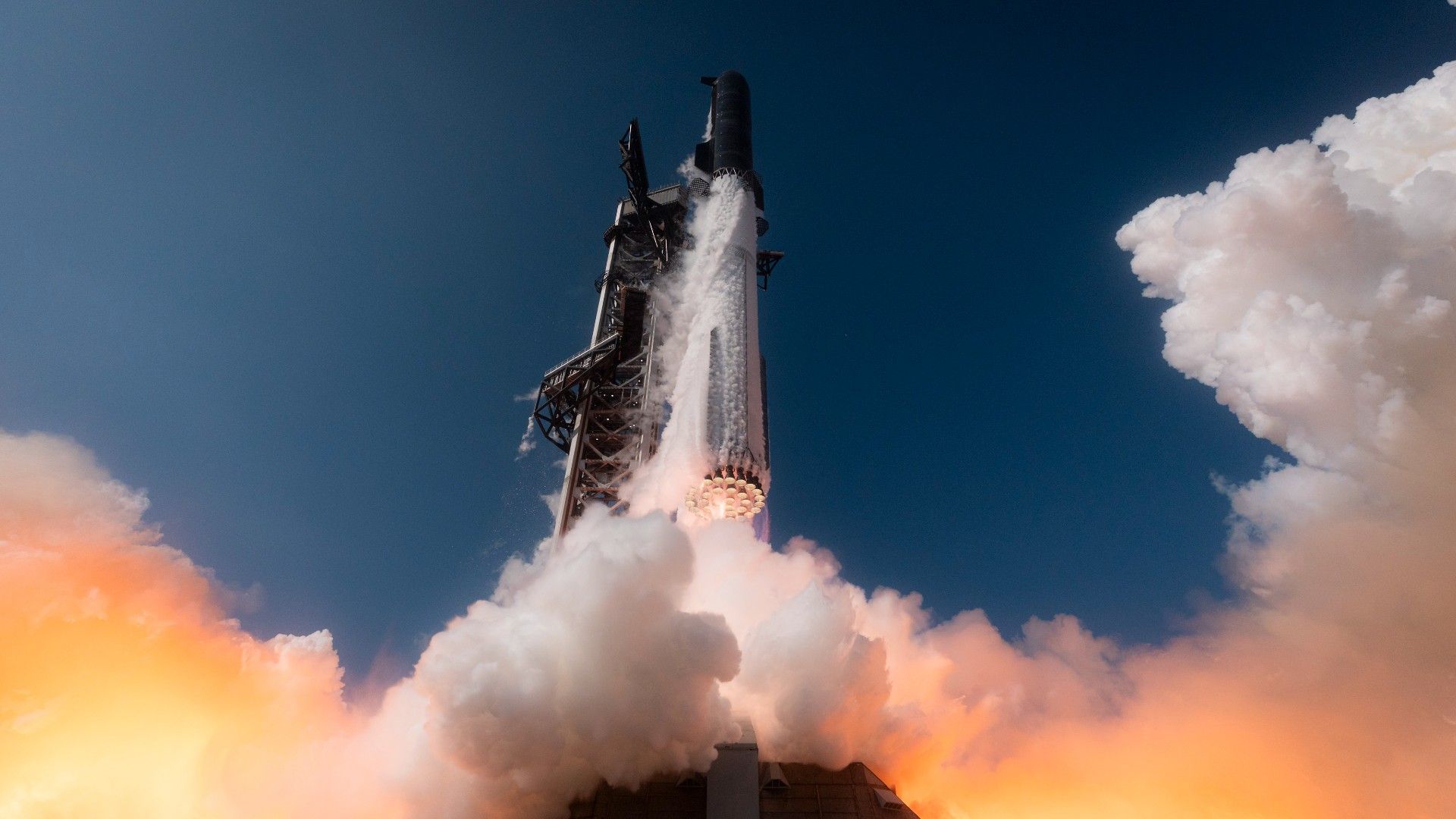
On May 22, SpaceX's first Starship V3 vehicle lifted off from the brand-new Pad 2 at the company's Starbase site in South Texas — the first Starship launch in more than seven months. V3 features major upgrades: an improved fuel-transfer system allowing the Super Heavy booster's 33 Raptor engines to fire more rapidly, a more efficient propulsion system on the Ship upper stage, larger propellant tanks, and new docking ports enabling future rendezvous with refueling "tanker" vehicles in Earth orbit.
Although a few engines shut down early during flight and the Super Heavy booster failed to execute its planned controlled landing burn — ultimately splashing down in the Gulf of Mexico in an uncontrolled manner — SpaceX declared the integrated test flight a qualified success, as the primary objective (delivering the Ship to a suborbital trajectory with a controlled Indian Ocean splashdown) was achieved.
FAA Grounds Fleet: Booster Failure Under Investigation
Five days after the launch, the U.S. Federal Aviation Administration (FAA) ordered Starship V3 grounded on May 27, directing SpaceX to investigate the Super Heavy booster malfunction during the Gulf of Mexico splashdown. The FAA determined the incident constituted a "mishap," though no public injuries or property damage were reported. SpaceX must complete the investigation under FAA oversight before resuming flights.
Roadmap: Orbital Tests and Propellant Transfer
According to SpaceX's official update published May 28, the post-FAA-return flight manifest includes the following milestones:
Phase 1 — Extended Orbital Stay and Data Gathering
Once cleared by the FAA, SpaceX will first execute an extended-duration mission, with a Starship spacecraft spending significant time in low Earth orbit to collect data on vehicle propulsion and thermal behavior under long-duration flight conditions, including sustained engine burns. The company targets completion of this test within 2026.
Phase 2 — Orbital Propellant Transfer Demonstration
Phase 2 will validate Starship's signature in-space refueling technology — a prerequisite for any deep-space mission to the Moon or Mars, where each crewed flight will require more than a dozen Starship vehicles to rendezvous and transfer propellant in orbit before proceeding.
Phase 3 — Uncrewed Lunar Landing Test
Both SpaceX's Starship and Blue Origin's Blue Moon must successfully complete an uncrewed lunar landing demonstration before being certified for NASA crewed missions. NASA plans to use Starship for the Artemis 4 crewed lunar landing mission, currently scheduled for late 2028, which will require SpaceX to have integrated life support systems, crew elevator, and airlock technologies well in advance.
Long-Term Vision: 10,000 Launches Per Year
SpaceX founder Elon Musk posted on X (his owned platform) on May 23, revealing the program's ambitious production and launch cadence targets:
"Our goal is launching Starship >10k/year, which would be more than once an hour. Probably over 200 tons of useful load to a useful orbit per flight."
Musk also stated that "the Starship production pipeline is full and will complete roughly 10 more ships and about half that number of boosters this year."
Artemis Missions: Starship vs. Blue Origin
NASA selected Starship as the primary crewed lunar lander for its Artemis program in 2021, while also contracting Blue Origin's Blue Moon as a competing backup vehicle. Both spacecraft remain in development and NASA has yet to finalize vehicle assignments for Artemis 3 and Artemis 4. SpaceX is working to meet the late-2028 timeline for Artemis 4, which demands Starship to deliver astronauts from the lunar Gateway to the Moon's surface.