
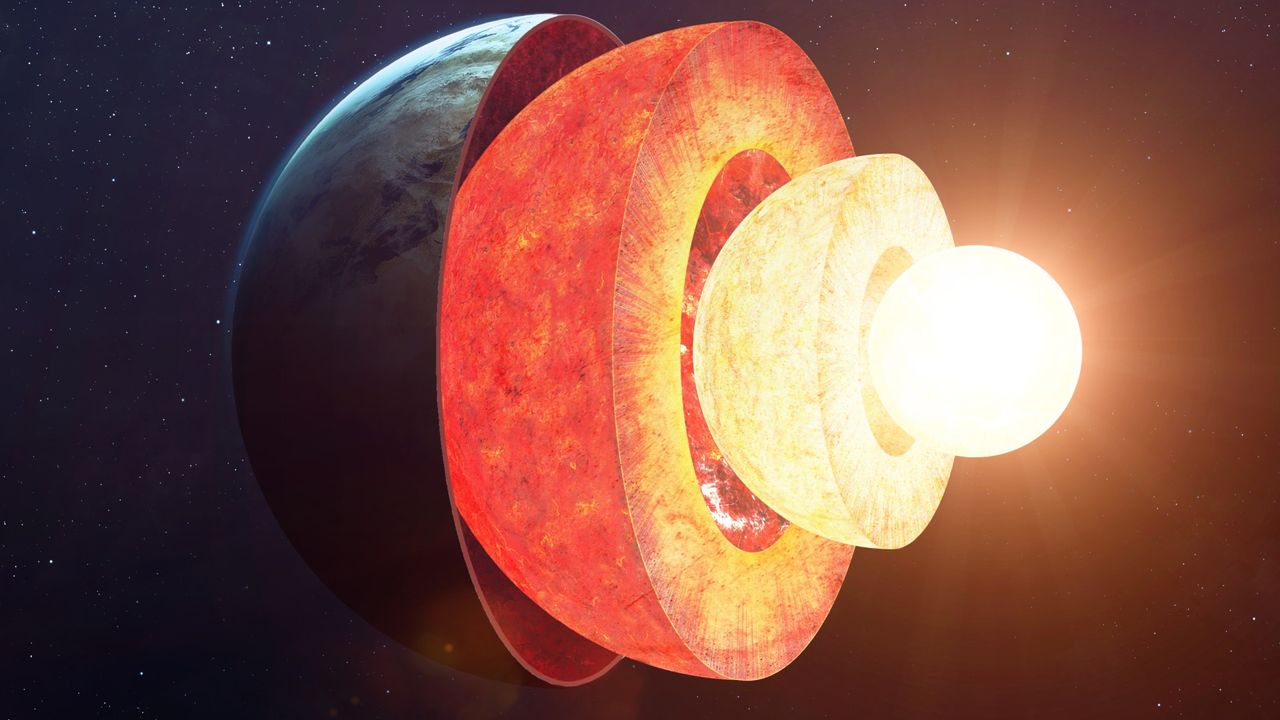
Most Common Galaxy Planets May Lack Clear Cores: New Study Challenges Classic Structure Models
Summary: New research reveals that sub-Neptunes — the most common type of planet in the Milky Way — may lack a distinct core-mantle structure because iron, silicates, and hydrogen become fully miscible at extreme temperatures and pressures above 4,000 Kelvin, forming a homogeneous fluid throughout the interior. The study, submitted to the Astrophysical Journal and posted on arXiv, challenges the textbook model that assumes rocky planets form like Earth with a dense metallic core.