
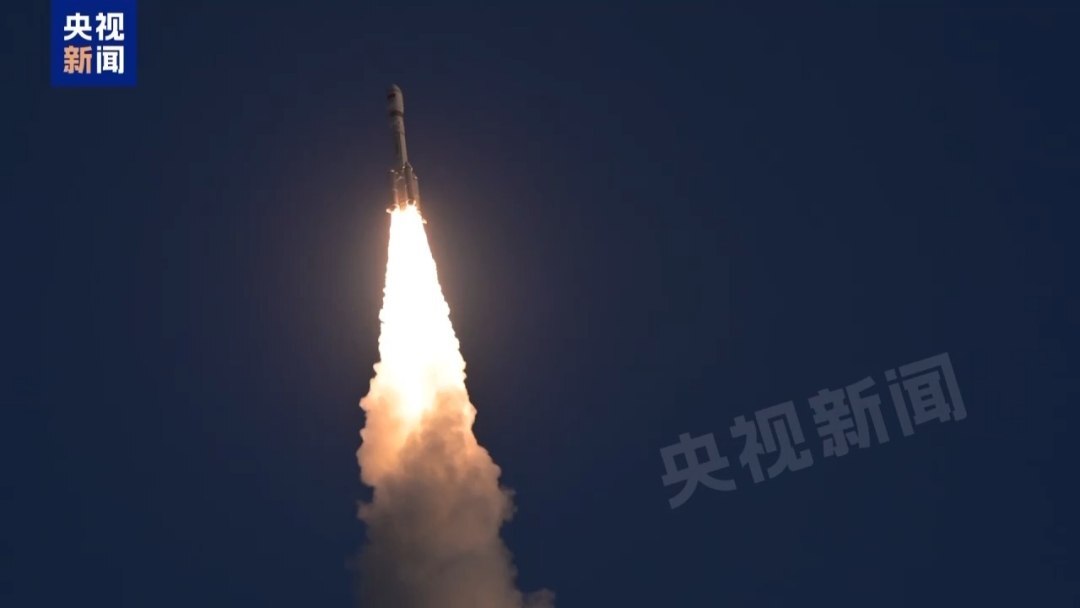
Long March 6A Modified Launches 18 Qianfan Polar-11 Satellites, Marking 648th Long March Flight
Summary: On June 4, 2026 at 19:39 Beijing time (11:39 UTC), a Long March 6A modified (CZ-6A) rocket lifted off from the Taiyuan Satellite Launch Center and successfully deployed the Qianfan Polar Group 11 satellites — 18 satellites in a single launch — into the planned polar orbit. The mission marks the 648th flight of the Long March launch vehicle series, and the second constellation-deployment launch of June 2026, following the Long March 12B's maiden flight on June 1 with the Qianfan Group 08 batch.
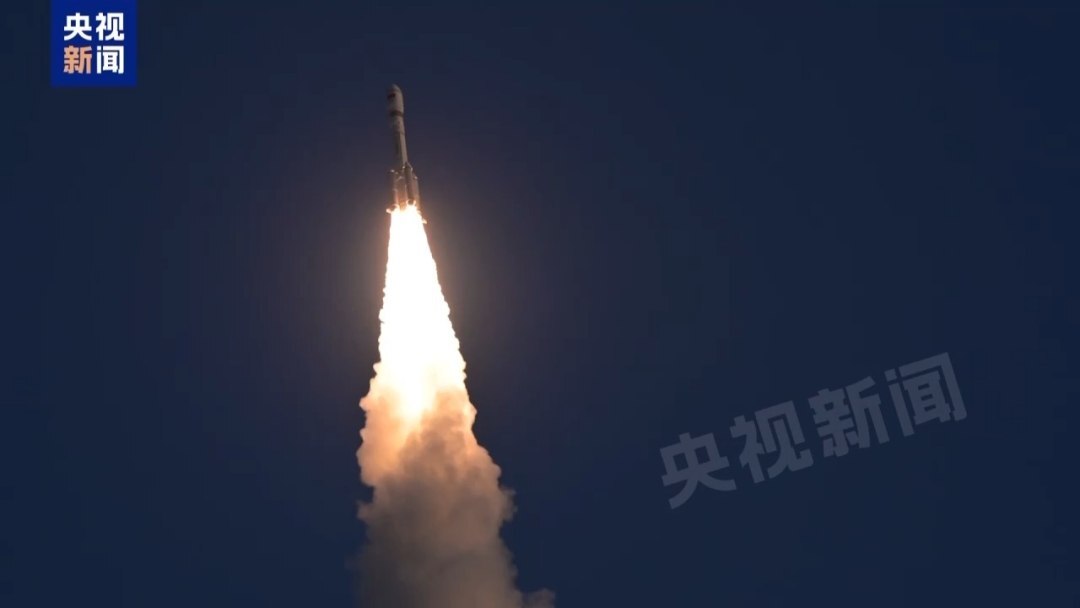
Mission: CZ-6A + Qianfan Polar-11
According to the China Aerospace Science and Technology Corporation (CASC) statement released in the early hours of June 5, on June 4 at 19:39 BJT, the Long March 6A modified rocket lifted off from the Taiyuan Satellite Launch Center, and the Qianfan Polar Group 11 satellites subsequently entered the planned orbit. The launch is the second in June to carry a Qianfan batch, after the Long March 12B's first flight three days prior.
Launch Vehicle. The Long March 6A modified is a "liquid core + solid strap-on boosters" two-and-a-half-stage configuration developed by the CASC 8th Academy. It is designed for dense-launch flexibility — single-satellite, multi-satellite series, parallel, stacked, wall-mounted, and rideshare modes — with a sun-synchronous orbit payload capacity of at least 4.5 tonnes at 700 km altitude.
Payload. The Qianfan Polar Group 11 consists of 18 satellites, with launch services provided by CASC's China Great Wall Industry Corporation (CGWIC) as the general contractor. The "polar" designation refers to the near-90-degree inclination orbit, with the satellites traveling north-south as Earth rotates beneath them — the geometry that enables global coverage for low-Earth-orbit broadband constellations.
Flight 648, with rainy-season pre-checks
This mission is the 648th flight of the Long March launch vehicle series. The cadence has been visibly accelerating: the 600th Long March flight was completed on February 14, 2026 with another CZ-6A mission (Starlink-equivalent 17-13 from Vandenberg's Chinese counterpart), and the series has added 48 more flights in roughly 100 days. June alone is on track for at least two Qianfan deployments, plus the Long March 12B's maiden flight.
In preparation for the launch, the rocket test team addressed recent rainy weather conditions by pre-checking all operation flows and rain-protection measures, refining transport and hoisting procedures, and tightening safety controls. This level of pre-launch precaution is not routine posturing — CZ-6A's four 2-meter-diameter solid strap-on boosters, supplied by the CASC 4th Academy, are humidity-sensitive during transport and storage. The October 2024 CZ-6A mission deliberately held its booster set on the pad for 80 days to validate seal behavior under long-term storage.
June cadence: a second constellation launch
The June 4 mission is the second constellation-deployment launch in China this month:
- June 1, 16:40 BJT — Long March 12B Y-1 successfully completed its maiden flight from the Dongfeng Commercial Space Innovation Test Zone, carrying the Qianfan Polar Group 08 satellites into orbit. Long March 12B is China's largest single-core rocket, positioned as a reusable Falcon 9-class medium-lift launch vehicle for LEO mega-constellation deployment.
- June 4, 19:39 BJT — Long March 6A modified deployed Qianfan Polar Group 11 from Taiyuan.
The two missions are separated by less than 90 hours and use two different technical routes — a new reusable liquid rocket for the first mission and a mature solid-liquid hybrid medium-lift rocket for the second — illustrating how China's June cadence is built on parallel tracks: high-density constellation deployment, and the maturation of reusable launch technology.
Qianfan constellation deployment rhythm
The Qianfan ("Thousand Sails") constellation is one of China's flagship low-Earth-orbit broadband internet systems. It has followed a steady "18 satellites per launch" batch-deployment rhythm since August 2024:
- August 6, 2024 — Batch 01, 18 satellites, CZ-6A, Taiyuan;
- October 15, 2024 — Batch 02, 18 satellites, CZ-6A, Taiyuan;
- December 5, 2024 — Batch 03, 18 satellites (54 cumulative in 2024);
- January 23, 2025 — Batch 04, 18 satellites (72 in orbit, entering steady-state);
- Subsequent batches continued on a roughly monthly cadence;
- May 12, 2026 — Batch 10 (Qianfan Group 09);
- June 1, 2026 — Batch 11 (Qianfan Group 08, paired with Long March 12B maiden flight);
- June 4, 2026 — Batch 12 (Qianfan Group 11, this mission).
From August 2024 to June 2026, the Qianfan program has scaled from a single-batch demonstrator to a steady-state deployment cadence — the same "boring, frequent, predictable" launch rhythm that Starlink pioneered. The June 1 + June 4 back-to-back Qianfan launches, on two different vehicles, show that China's commercial space sector is now operating on the dual assumption that reusable rockets will mature into service, and that reliable expendable rockets like CZ-6A will keep filling the throughput gap in the meantime.
Sources (original pages)
- China successfully launches Qianfan Polar Group 11 satellites — Xinhua News (via China National Radio / QQ)
- One rocket, 18 satellites: China successfully launches Qianfan Polar Group 11 — China News Service (via QQ)
- CZ-6A successfully launches Qianfan Polar Group 11 — China.com.cn
- Qianfan Polar Group 11 satellites launch successful — Xinhua News (via QQ)