
Northeastern US boom on May 30 was a meteor explosion equal to 300 tons of TNT, NASA confirms
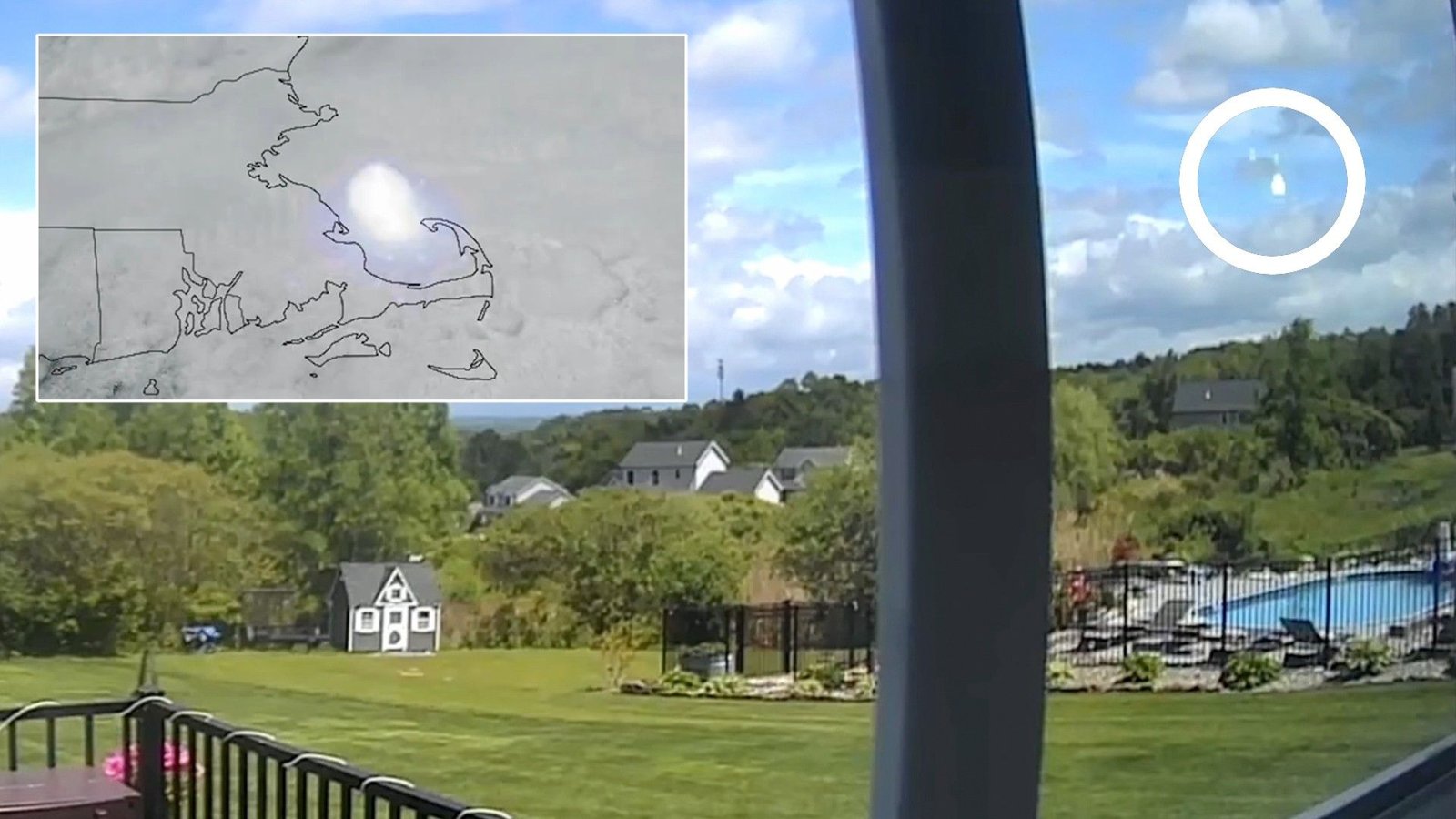
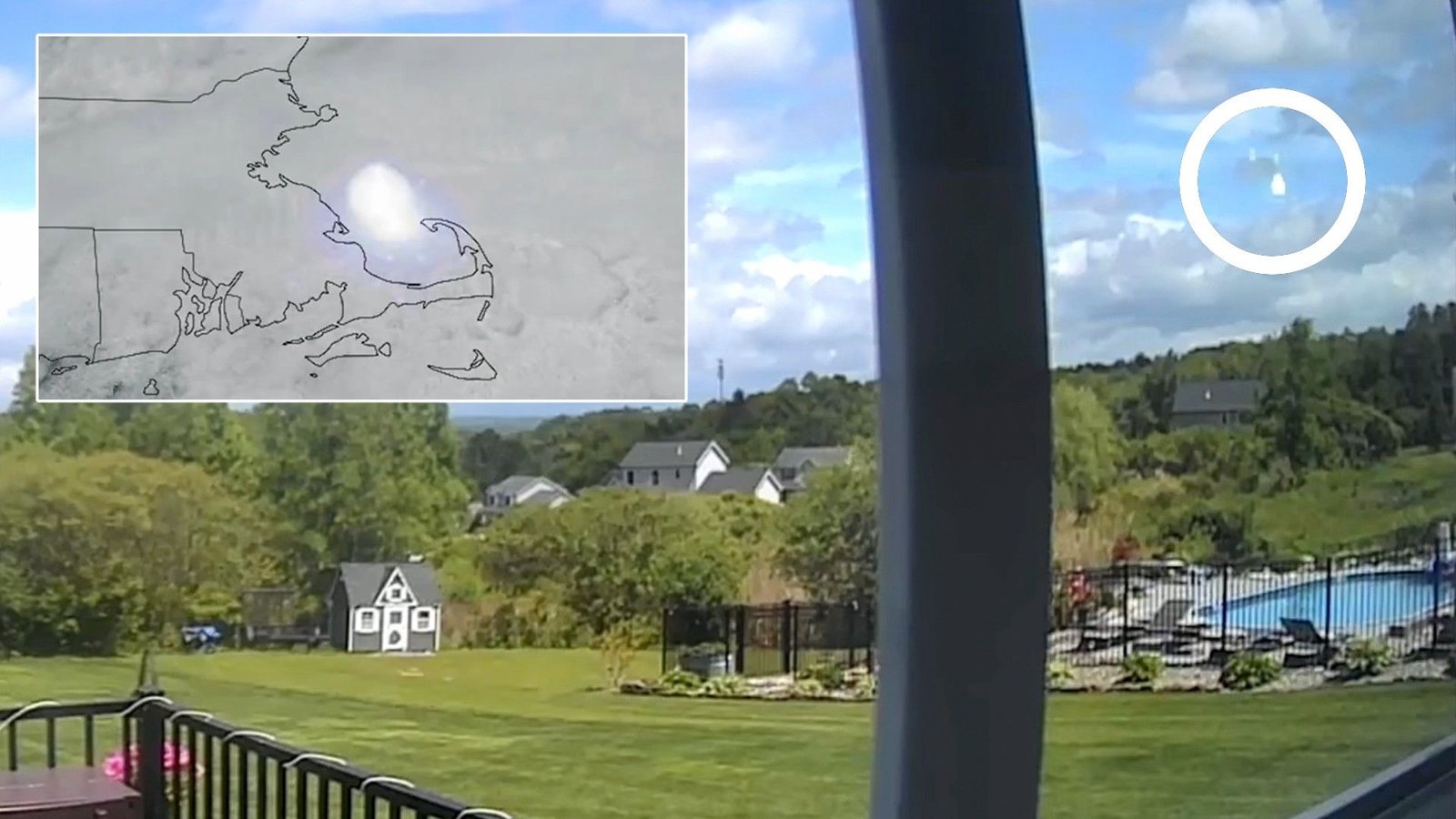
Summary: A daytime bolide broke up at roughly 40 miles (64 km) altitude over the Massachusetts-New Hampshire border on May 30 at 2:06 p.m. EDT, releasing energy equivalent to about 300 tons of TNT. NASA confirmed the event on June 1 using eyewitness reports submitted to the American Meteor Society and imagery from the GOES-19 weather satellite's Geostationary Lightning Mapper. Radar networks tracked the fragments as they fell into Cape Cod Bay.
Two independent lines of evidence
The boom was heard from eastern Massachusetts into New Hampshire, upstate New York, Connecticut, and Rhode Island. Residents described the sound as "thunder on a clear day" and "the whole house shook." The American Meteor Society (AMS) collected hundreds of eyewitness reports under event #3867-2026. NASA's Meteoroid Environment Office at the Jet Propulsion Laboratory subsequently pulled imagery from the Geostationary Lightning Mapper (GLM) aboard NOAA's GOES-19 weather satellite and confirmed the timing: 2:06 p.m. local time on May 30.
"The meteor appears to have fragmented at an altitude of 40 miles over northeast MA and southeast NH," NASA officials wrote on X on May 31. "The energy released at breakup is estimated to be equivalent to about 300 tons of TNT, which accounts for the loud noise." NASA's Astromaterials Research and Exploration Science division added that any surviving pieces almost certainly fell into Cape Cod Bay, noting in characteristically dry prose that the fall "is technically called a 'fishy squisher,' in uber-serious scientific terms."
Radar and satellite tracking
NEXRAD Doppler radar provided independent confirmation. Stations at Boston (KBOX), Boston Logan International Airport (TBOS), Long Island (KOKX), and Albany (KENX) all returned meteor echoes, with Portland, Maine (KGYX) also showing a possible signature. The Cooperative Institute for Research in the Atmosphere (CIRA) at Colorado State University released GLM imagery on X confirming that the satellite instrument had detected the bright flash of the daytime fireball.
Because the breakup happened in broad daylight at very high altitude, observers on the ground did not see a streak — they heard and felt the sonic boom. NASA emphasized that the event was not associated with any active meteor shower; May 30 falls between the η-Aquariids and the southern δ-Aquariids, both of which are still weeks from their peaks.
A routine event, but rare to witness
By NASA's own definition, a "bolide" is a meteor bright enough to produce a sonic boom. The agency tracks a steady stream of such events worldwide each year, but most occur over open ocean, sparsely populated land, or at night. Daytime events that are simultaneously recorded by a geostationary weather satellite and multiple NEXRAD radars are uncommon. The previous widely-publicized bolide over the US Northeast was in February 2023, when a roughly 100-kilogram asteroid exploded over Ohio.
NASA closed its official update with tongue-in-cheek advice for would-be meteorite hunters: "While all the meteorites from this fall landed in water, the water depth at the fall site is 34 m (100 feet). Most meteorites are strongly attracted to a magnet, and these ones are within reach of a 100-feet length of rope dangled off of a boat. In case anyone is interested in such factoids."
No injuries or property damage were reported. The event nonetheless serves as a reminder that small near-Earth objects can break up over populated regions with essentially no warning. NASA and the US Space Force are jointly developing the next-generation planetary defense architecture, including the NEO Surveyor infrared space telescope currently scheduled to launch in 2027 and a planned upgrade to the ground-based radar network.