ESA Completes First Full-Size Space Rider Test Model Assembly
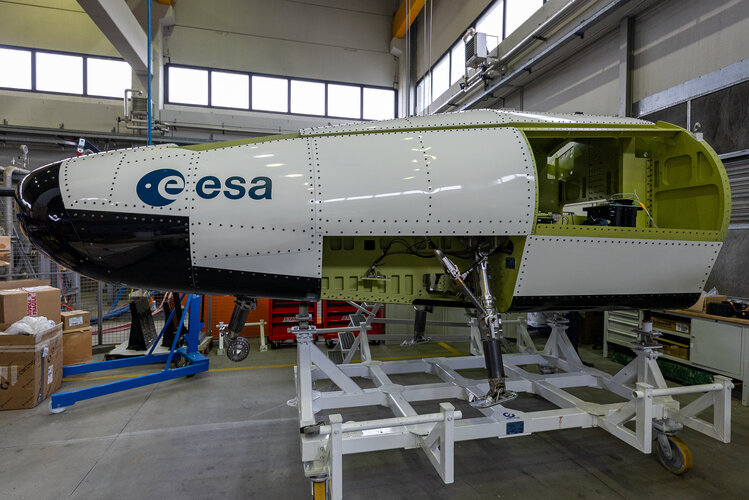
Summary: ESA announced on April 23, 2026, the completion of the first full-scale test model assembly of Space Rider, Europe's reusable space transportation system. The uncrewed robotic laboratory — roughly the size of two minivans — is being developed by ArianeGroup under ESA contract and designed to launch aboard Vega-C, stay in orbit for about two months, and return to Earth for recovery and reuse.
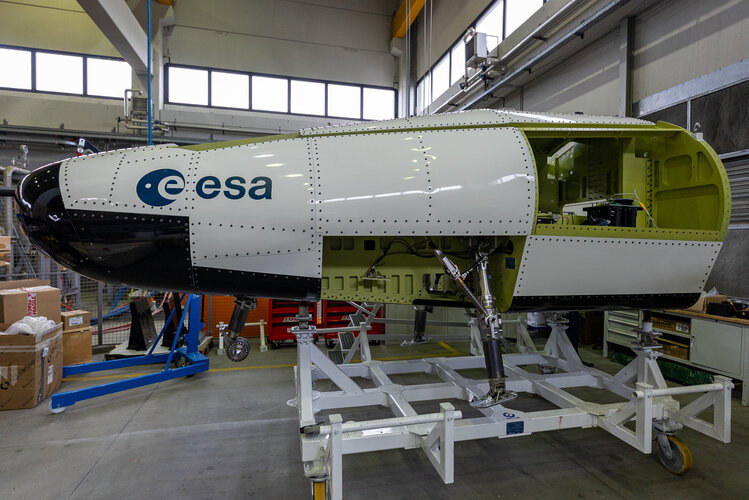 Image credit: ESA (Used with permission)
Space Rider is Europe's first reusable space transportation system, developed by ArianeGroup under a contract with ESA. On April 23, 2026, ESA announced the completion of the spacecraft's first full-scale test model assembly — a key milestone toward establishing European independent and controllable reusable space cargo capabilities.
According to ESA, Space Rider is approximately the size of two minivans, weighing several tonnes. It is designed to launch aboard the Vega-C rocket from Europe's Spaceport in Kourou, French Guiana. After launch, Space Rider will remain in low Earth orbit for approximately two months, conducting scheduled robotic experiments and technology demonstrations. Upon mission completion, it will execute a controlled reentry and land at a designated site, enabling hardware recovery and reuse.
The Space Rider program aims to provide Europe with an independent, reliable, and reusable access to and return from low Earth orbit, serving European scientific, industrial, and commercial needs. As a passenger of the Vega-C rocket, it will fill a critical gap in Europe's autonomous space capabilities, competing with U.S. SpaceX Dragon and Chinese cargo spacecraft.
ESA stated that Space Rider is planned to complete flight qualification and enter commercial operations in the coming years. Europe's reusable space capability will complement the Ariane 6 rocket in cargo return services.