Tianlong-3 Maiden Flight Fails: China's Falcon 9-Class Commercial Rocket Loses Control After Liftoff
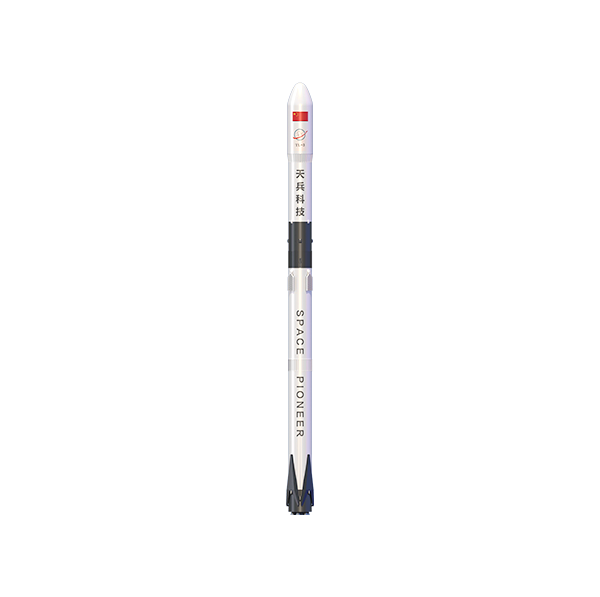 Image credit: Space Pioneer
Summary: On April 3, 2026 at 04:17 UTC (12:17 Beijing Time), Space Pioneer's Tianlong-3 liquid-fueled launch vehicle lifted off from the Dongfeng Commercial Aerospace Innovation Zone (Jiuquan Satellite Launch Center). However, approximately 33 seconds into flight, an anomaly was detected in the first-stage engine section, causing the vehicle to lose attitude control. The mission team terminated the flight, and the maiden flight ended in failure. Space Pioneer issued a statement apologizing to partners and confirming that a failure investigation and corrective action program is underway.
Incident Timeline
According to Space Pioneer's official statement:
"On April 3 at 12:17, the Tianlong-3 Y1 launch vehicle lifted off from the Dongfeng Commercial Aerospace Innovation Zone. The rocket experienced a flight anomaly, and the maiden flight test mission failed. The specific cause is under further analysis and investigation."
Multiple reports indicate the first-stage engine compartment developed an anomaly ~33 seconds after liftoff, causing immediate loss of attitude control. The mission, which was to deploy a batch of Qianfan constellation satellites into polar orbit, was scrubbed.
Rocket Specifications
- Height: ~72 m
- Diameter: 3.8 m
- Liftoff mass: ~600 tonnes
- Liftoff thrust: ~855 tonnes (9 × TH-12 kerolox engines)
- LEO capacity: 17–22 tonnes
- SSO capacity: 10–17 tonnes
- First stage engines: 9 × Tianhuo-12 (TH-12), ~109 tf sea-level thrust each
- Second stage engine: 1 × TH-12V (vacuum-optimized)
- Propellant: LOX / RP-1 (kerolox)
- Design reuse: First stage up to 10–20 flights
A Rocky Road to Launch
Tianlong-3's development has been marked by setbacks. On June 30, 2024, a first stage accidentally detached from its test stand during a static fire in Gongyi, crashing 1.5 km away with no casualties. Space Pioneer implemented 127 corrective measures and 13 additional ground validation tests.
A successful 30-second static fire on September 15, 2025, at the Haiyang sea launch platform confirmed recovery. The originally planned late-2025 maiden flight was repeatedly delayed by technical adjustments and scheduling, then further pushed from April 2 to April 3 due to high winds and dust storms at the launch site.
Company Response
Space Pioneer stated:
"We apologize to our partners and all sectors of society who care about commercial space development. We have joined with relevant experts and technical teams to strictly execute the failure investigation and corrective action program to ensure the success of subsequent launch missions."
Space Pioneer previously achieved successful launches of Tianlong-1 and Tianlong-2, with Tianlong-2 becoming China's first private liquid-fueled rocket to reach orbit in April 2023.
Industry Impact
Dubbed "China's Falcon 9," Tianlong-3 was the country's first commercial rocket with 17–22 tonne LEO capacity, positioned as a key vehicle for deploying China's mega-constellations. The failure will impact deployment schedules, but test flight failures are not uncommon in aerospace — SpaceX's Falcon 9 also experienced multiple early failures.
2026 has been called China's "Year of Reusability," with LandSpace's Zhuque-3 and iSpace's Hyperbola-3 also targeting maiden flights or recovery tests.