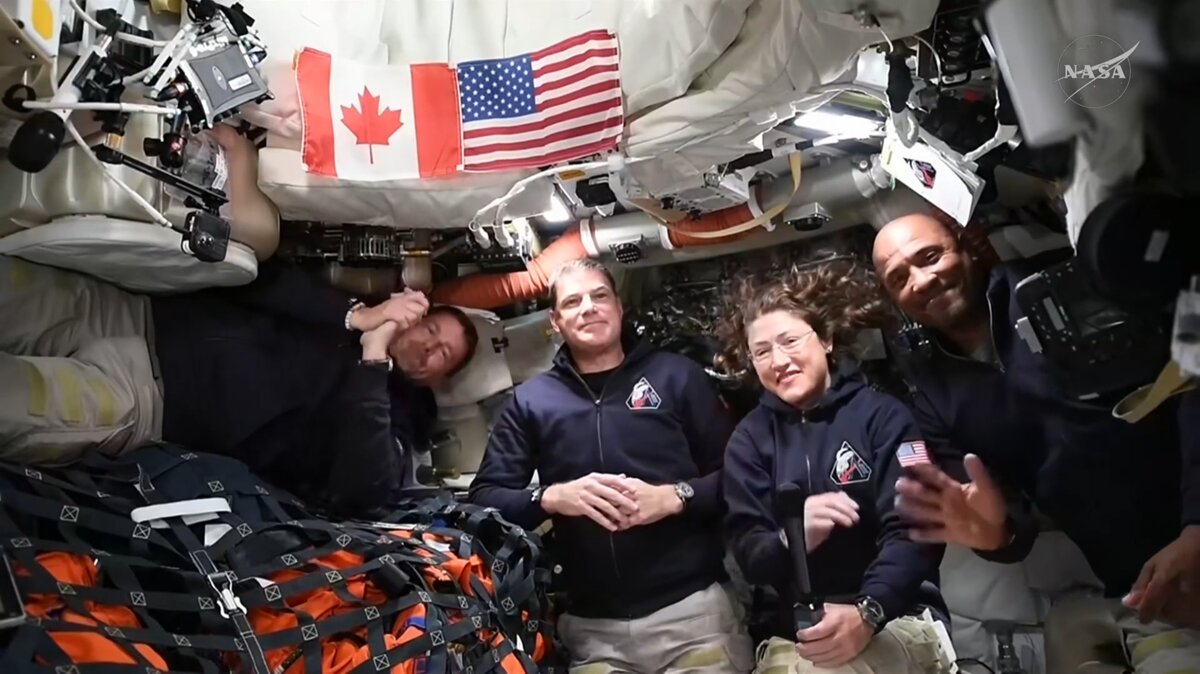
Artemis II Flight Day 4: Deep-Space Flying, Lunar Flyby Prep as Glover Takes Manual Control
Summary: Artemis II has entered its fourth flight day. The four astronauts — NASA's Reid Wiseman, Victor Glover, Christina Koch, and CSA astronaut Jeremy Hansen — are approximately 169,000 miles from Earth, preparing for the April 6 lunar flyby. Today, Victor Glover will take manual control of Orion to test its handling qualities in deep space. The crew will also review lunar surface observation targets assigned by NASA's science team and continue biomedical experiments.
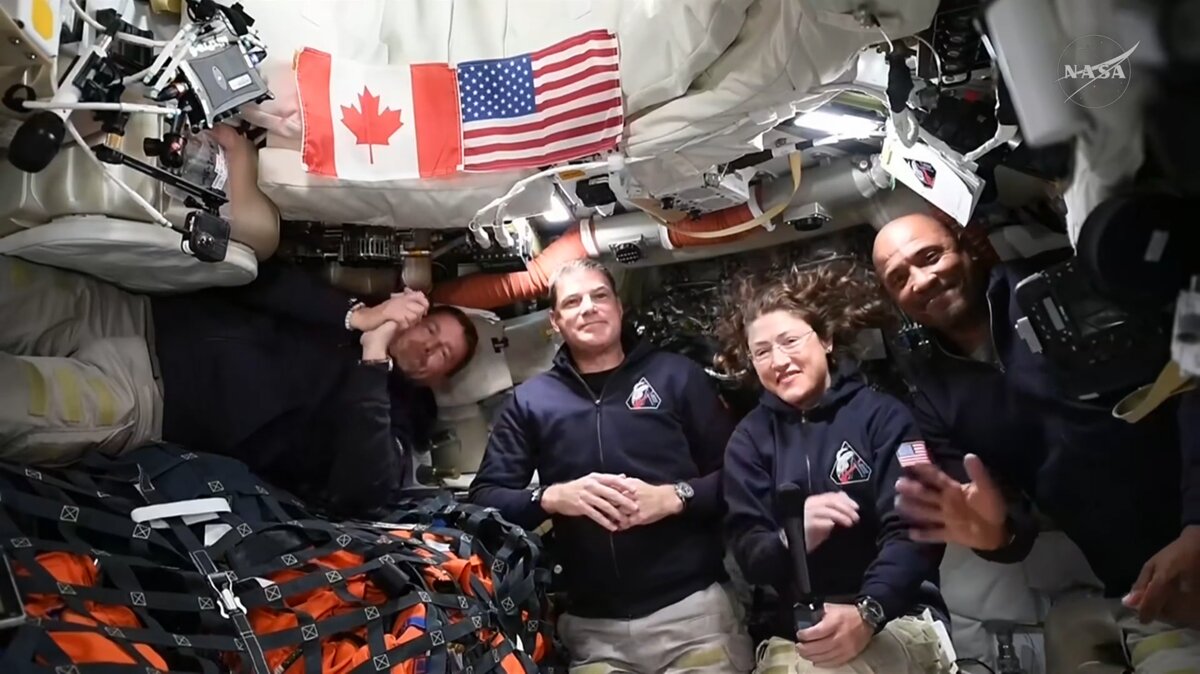 Credit: NASA
Deep-Space Manual Piloting Test
Later today, Victor Glover will take manual control of Orion to test the spacecraft's handling qualities in deep space, collecting performance data across different movement modes. A 24-hour acoustics test is also underway to help engineers characterize the sound environment inside the spacecraft.
Lunar Flyby Science Preparation
After the piloting demonstration, the crew will review a list of lunar surface features assigned by NASA's science team for observation during the six-hour flyby on April 6. Orion will pass within 4,066 miles of the lunar surface at closest approach — far higher than the ~70-mile altitude of Apollo missions. From this unique vantage, the crew will see the entire lunar disk at once, including both polar regions.
The crew will apply geology skills trained in classrooms and Moon-like environments on Earth to photograph and describe impact craters, ancient lava flows, and surface cracks and ridges. They will note differences in color, brightness, and texture, helping scientists understand the Moon's composition and formation history.
Solar Eclipse from Space
During the flyby, as Orion, the Moon, and the Sun align, the crew will observe a solar eclipse from space — the Sun will disappear behind the Moon for about an hour. The crew will use this opportunity to study the solar corona and look for flashes from meteoroids striking the lunar surface.
Record-Breaking Distance
During the flyby, Orion is expected to surpass the Apollo 13 distance record. Apollo 13 reached 248,655 miles from Earth; Artemis II will reach 252,757 miles, exceeding the record by about 4,102 miles.
Communications Blackout
When Orion passes behind the Moon, the mission will experience a planned communications blackout of approximately 40 minutes starting around 5:47 PM EDT, as the Moon blocks radio signals between the Deep Space Network and the spacecraft.
Biomedical Payloads
The AVATAR payload is carrying bone marrow cells derived from crew blood samples to study how the human immune system responds to deep space. DLR-provided M-42 radiation sensors, alongside NASA's own radiation instruments, are characterizing radiation levels throughout the spacecraft.